Tactical Nuclear Warhead
The only answer to a Hive that refuses to die.

Fastfission · Public domain
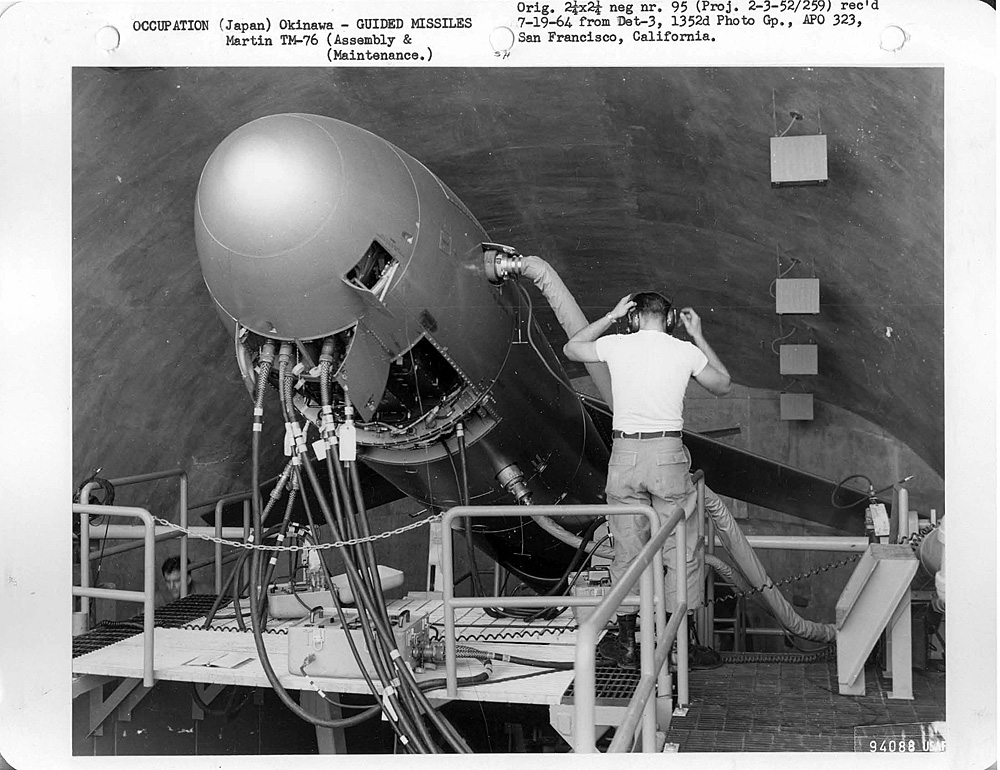
The Tactical Nuclear Warhead serves as the ultimate equalizer in the Federation's war against the Arachnids, a weapon of mass destruction deployed when conventional firepower proves insufficient against the overwhelming numbers and armored hides of the Bugs. While standard infantry rely on railguns and fragmentation grenades for individual threats, these nukes are reserved for decimating entire Bug hives or neutralizing the colossal threat of a Warrior-class unit in a single, catastrophic detonation. In the desperate struggle for human survival across the galaxy, the Tactical Nuclear Warhead represents the Federation's willingness to sacrifice territory and environment to secure victory. Its deployment is not merely an act of combat but a statement of resolve: humanity will burn worlds rather than yield them to the Arachnid swarm.
- Effectiveness
- Capable of destroying a single Bug hive and the surrounding area in a single detonation
Lore & Background
Throughout the long and brutal conflict with the Arachnids, the Mobile Infantry has faced enemies capable of burrowing deep underground or scaling massive vertical surfaces, rendering traditional artillery ineffective. The Tactical Nuclear Warhead emerged as the Federation's countermeasure against these fortified positions. When a planet is overrun or a Hive is discovered that can withstand sustained bombardment, command authorizes a nuclear strike to ensure total sterilization of the area. The psychological impact of this weapon cannot be overstated; it signifies a shift from tactical engagement to existential warfare. For the soldiers on the ground, seeing the mushroom cloud rise over a Bug nest is both terrifying and relieving, knowing that the immediate threat has been erased in a flash of blinding light. It underscores the grim reality of the war: sometimes, the only way to save humanity is to destroy everything else.
In Their Own Story
The sky above Klendathu's secondary hive glowed an unnatural orange as the drop pods screamed through the atmosphere, their heat shields glowing white-hot. Sergeant Zim watched the telemetry on his wrist comp; the ground was shaking with the rhythmic thumping of thousands of Arachnid legs converging on their position. 'They're too many,' he muttered, checking his railgun's charge. Then, the sky tore open. A single Federation drop ship released its payload—a heavy, silver canister that fell in silence before detonating. There was no sound at first, only a light so bright it turned night into day, bleaching the color from the world. The shockwave hit seconds later, a wall of fire and force that vaporized the approaching swarm instantly. When the dust settled, the Hive was gone, replaced by a smoking crater of glassed earth. Zim exhaled, his face streaked with ash, knowing they had survived another day.
Reader's Guide
The Tactical Nuclear Warhead functions as a high-yield explosive device designed to deliver massive thermal and kinetic energy over a wide area. Unlike standard munitions that rely on fragmentation or penetration, this weapon utilizes nuclear fission to generate an instantaneous blast radius capable of incinerating organic matter and collapsing subterranean structures. Its primary limitation is the lack of precision; it cannot distinguish between enemy combatants and friendly forces, making it unsuitable for urban environments or close-quarters engagements where civilians or allied troops are present. Additionally, the radiation fallout can render a sector uninhabitable for extended periods, complicating future occupation efforts. Tactically, these warheads are employed as a last resort when conventional infantry and armor cannot halt an advancing swarm or breach a heavily fortified Hive. Command must weigh the strategic value of the target against the environmental cost, often authorizing strikes only to prevent total planetary loss. In combat scenarios, their presence alone can demoralize enemy forces, though the Arachnids seem immune to fear.
Did You Know?
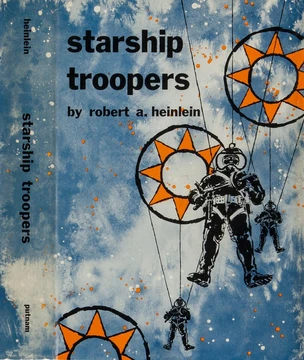
- The film Starship Troopers is an adaptation of the Heinlein novel of the same name.
- In the novel The Moon Is a Harsh Mistress (1966) by Robert A. Heinlein, lunar colonists repurpose a mass driver to launch large rocks at Earth as kinetic bombardment weapons.
- The concept of kinetic orbital bombardment originated during the Cold War.
- Project Thor was an idea for a weapons system that launches telephone pole–sized kinetic projectiles made from tungsten from Earth's orbit to damage targets on the ground.
- Jerry Pournelle created the Project Thor concept while working in operations research at Boeing in the 1950s before becoming a science-fiction writer.
Conceptual Origins and Design Philosophy
The theoretical framework for kinetic orbital strikes emerged during the Cold War, envisioning a method of planetary attack that relies entirely on inert projectiles rather than chemical or nuclear explosives. The core concept involves deploying satellites equipped with magazines of dense tungsten rods, which are deorbited to intersect specific ground targets via suborbital trajectories. These projectiles are meticulously shaped to minimize atmospheric drag, ensuring they retain maximum velocity upon impact. This approach offers a distinct tactical advantage: the ability to strike from extreme altitudes at hypersonic speeds, creating a trajectory that is exceptionally difficult for existing defense systems to intercept. Because the destructive force derives purely from kinetic energy generated by orbital velocities, these weapons bypass the need for volatile warheads, leading to their colloquial designation as 'rods from God.' However, the viability of such a system faces significant hurdles, including the immense financial cost of maintaining ammunition in orbit and the profound technical challenges required to ensure precise targeting accuracy over vast distances.
Historical Precedents and Project Thor
While modern iterations focus on orbital mechanics, the lineage of kinetic bombardment traces back to earlier aerial warfare concepts. During the Korean and Vietnam conflicts, military forces utilized the 'Lazy Dog' bomb, a small, fin-stabilized projectile dropped from aircraft that functioned similarly to a vertically fired machine gun against enemy troops. This principle of using mass and velocity for destruction was further explored in the 1980s through the Strategic Defense Initiative's 'Brilliant Pebbles' concept. The most direct ancestor to modern orbital theories is Project Thor, an idea conceived by Jerry Pournelle while working at Boeing in the 1950s. This proposal envisioned launching telephone pole-sized tungsten projectiles from Earth orbit to devastate surface targets. Although initially a theoretical construct for military research, Pournelle later popularized the concept through his science fiction writing, bridging the gap between speculative engineering and cultural imagination long before it was seriously revisited by government agencies in the twenty-first century.
Operational Capabilities and Strategic Limitations
A comprehensive analysis of the United States Air Force's 2003 proposal for 'Hypervelocity Rod Bundles' highlights both the potential power and practical constraints of this technology. The design called for satellite-controlled, 20-foot-long tungsten cylinders capable of global strike capability with impact speeds reaching Mach 10. While these rods would lose significant velocity during atmospheric re-entry, their remaining kinetic energy—equivalent to roughly 11.5 tons of TNT per rod—would be sufficient to penetrate deeply buried bunkers and command centers. A constellation of just six to eight satellites could theoretically strike any target on Earth within 12 to 15 minutes, offering a response time significantly faster than intercontinental ballistic missiles without the telltale launch warning. Despite these advantages, critics note that conventional bombs of similar weight offer comparable destructive power at a fraction of the cost and logistical complexity. Furthermore, the system must overcome severe atmospheric heating during re-entry, which could compromise non-tungsten components, limiting its practical application to scenarios where speed and stealth provide decisive strategic superiority.
Cultural Impact in Science Fiction
The concept of kinetic bombardment has transcended military theory to become a staple motif in science fiction literature and media. The idea was notably refined in the 1970s and 80s by authors like Larry Niven and Jerry Pournelle, who depicted alien forces utilizing Thor-type systems in novels such as 'Footfall.' Robert A. Heinlein's 1966 classic, 'The Moon Is a Harsh Mistress,' famously portrayed lunar colonists repurposing mass drivers to launch large rocks at Earth, using the sheer impact energy as an asymmetric weapon for psychological and physical warfare. This trope permeated roleplaying games like 'Traveller' and 'Shadowrun,' where such weapons were often termed 'ortillery.' Visual media also embraced the concept, featuring orbital strikes in franchises ranging from 'Babylon 5' to 'Starship Troopers' and modern video games like 'Call of Duty: Ghosts.' These fictional depictions have cemented the image of falling metal rods as a symbol of overwhelming, god-like destruction in the popular imagination.
Gallery
Frequently Asked Questions
What is the Tactical Nuclear Warhead in Starship Troopers?
It is a strategic weapon of mass destruction employed by the Terran Federation when standard infantry firepower fails against Arachnid forces. This device serves as the ultimate equalizer, designed specifically to neutralize threats that conventional railguns and grenades cannot handle.
What are the primary targets for this weapon?
The warhead is primarily deployed against massive Arachnid Hive Colonies or colossal Warrior-class units that pose an existential threat. Its destructive capability allows it to level entire planetary sectors, effectively eradicating these fortified Bug strongholds in a single strike.
How do Mobile Infantry troops deploy the Tactical Nuclear Warhead?
These weapons are delivered via aerial drops onto enemy positions or fired directly from Federation capital ships into contested zones. This deployment method ensures the warhead reaches deep within Arachnid territory to maximize its catastrophic impact.
Why is this weapon considered essential for human survival?
It acts as the only viable solution when a Hive refuses to be destroyed by conventional means, preventing overwhelming Bug numbers from crushing human defenses. Without this option, the Federation would lack the firepower necessary to decimate entire enemy populations and secure vital worlds.
How does the Tactical Nuclear Warhead differ from standard infantry gear?
While individual soldiers rely on railguns for precision and fragmentation grenades for close-quarters combat, this warhead is reserved for large-scale devastation. It functions as a force multiplier capable of ending battles instantly by obliterating entire enemy concentrations rather than engaging single targets.